Logistics companies handle enquiries about transportation, freight forwarding, cargo delivery, warehousing and shipment tracking every day. Customers want quick answers about service availability, delivery arrangements, pricing and estimated transit times. When this information is difficult to find, potential customers may contact another provider.
For logistics businesses in Malaysia, a professional website can make these interactions easier. Instead of depending entirely on telephone calls, emails and WhatsApp messages, companies can provide dedicated service pages, structured quotation forms and convenient customer enquiry options.
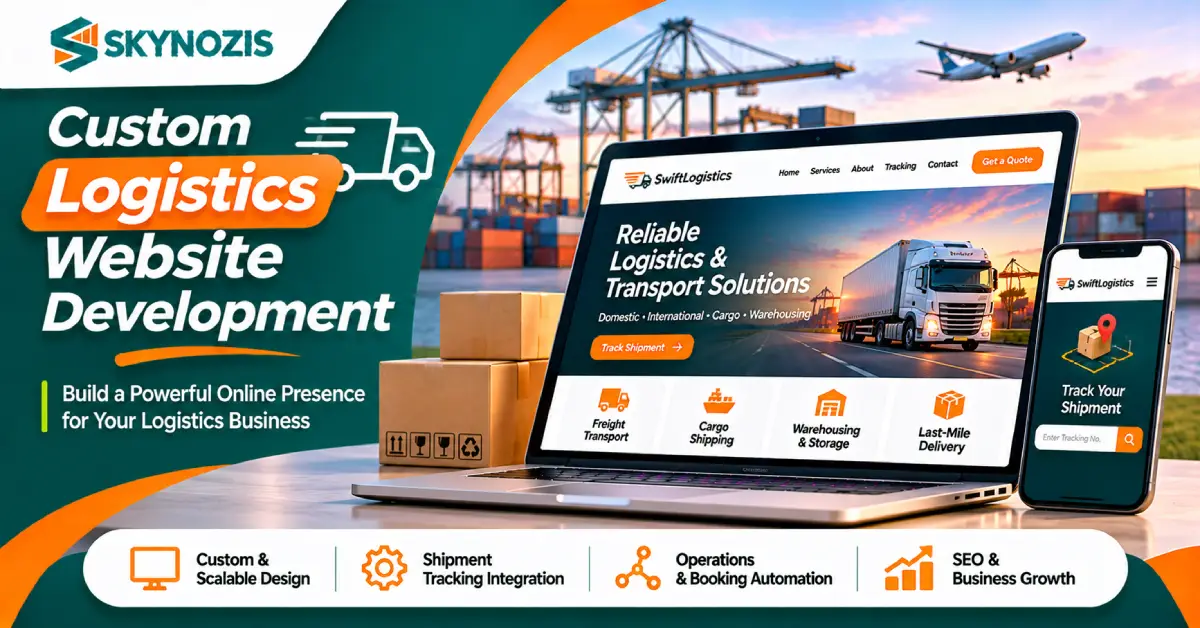
A well-planned logistics website development Malaysia solution should do more than display company information. It should help customers understand available services, request quotations and access relevant shipment information through a clear digital experience.
Whether you operate in Kuala Lumpur, Selangor, Johor Bahru, Penang or other Malaysian locations, a custom website can support your business communication and customer acquisition efforts.
Why Do Logistics Companies Need a Professional Website?
Logistics services often involve multiple processes, service categories and customer requirements. A business customer looking for international freight forwarding may have different requirements from someone searching for domestic transportation or warehouse storage.
A professional logistics company website helps organise these services and communicate important information in one place.
It can help your business:
- Present transportation and freight forwarding services.
- Explain domestic and international shipping options.
- Collect structured quotation requests.
- Provide shipment tracking access where supported.
- Display service coverage and operating locations.
- Introduce your company experience and capabilities.
- Generate enquiries from potential business customers.
For example, a manufacturer searching for a freight forwarding provider should be able to understand your available services and submit a quotation request without navigating through several unrelated pages.
Essential Website Features for Logistics Businesses
Dedicated Service Pages for Different Logistics Solutions
One common website limitation is presenting every logistics service on a single page.
Customers should be able to explore individual services without searching through lengthy descriptions.
Consider creating separate pages for:
- Freight forwarding services.
- Domestic transportation.
- International shipping.
- Air and sea cargo.
- Warehousing and distribution.
- Container transportation.
- Last-mile delivery.
- Supply chain solutions.
Each service page should explain what the service includes, the type of customers it supports, its coverage areas and how customers can request further information.
For example, a freight forwarding page can explain your import and export support, cargo handling arrangements and documentation assistance.
This structure also provides opportunities to target relevant search terms through individual service pages rather than relying on a single generic homepage.
Online Quotation Request Forms
Quotation requests are among the most important customer interactions for many logistics businesses.
A customer may need transportation from Kuala Lumpur to Penang, international freight forwarding or warehouse distribution services. Each request requires different information before your team can prepare an accurate quotation.
A customised logistics quotation form can collect details such as:
- Customer or company name.
- Contact email and telephone number.
- Pickup and delivery locations.
- Cargo type and description.
- Shipment weight and dimensions.
- Preferred transportation method.
- Expected pickup or delivery date.
- Additional handling requirements.
The form should adapt to the selected service wherever practical. For example, an international freight enquiry may require origin and destination countries, while a domestic transport request may only require pickup and delivery locations.
Once submitted, the enquiry can be delivered to the appropriate department through email notifications or a connected CRM system.
This reduces unnecessary back-and-forth communication and gives your sales team more useful information before contacting potential customers.
Shipment Tracking Integration
Customers increasingly expect convenient access to shipment information.
If your logistics business already uses a transportation management system, courier platform or shipment management application, consider integrating the appropriate tracking functionality into your website.
A tracking interface may allow customers to enter a shipment number or tracking reference and access information from the connected system.
Depending on the available API and provider capabilities, this can display:
- Shipment reference details.
- Current tracking status.
- Collection and dispatch updates.
- Transit progress.
- Delivery confirmation, where available.
It is important to distinguish between a genuine live tracking integration and a basic tracking enquiry form. A website cannot provide real-time shipment information without a reliable data source or connected tracking service.
For businesses that already have an operational tracking system, custom website integration can make existing information more accessible to customers.
Customer Enquiry and Communication Workflows
A logistics company may receive enquiries from manufacturers, retailers, distributors, importers and individual customers.
Managing every enquiry manually can become difficult as the business grows.
Your website can support a more organised communication process through:
- Service-specific enquiry forms.
- Automatic acknowledgement emails.
- Department-based enquiry routing.
- CRM integration.
- WhatsApp contact options.
- Customer support request forms.
For example, an enquiry about international freight forwarding can be routed to the freight department, while a domestic transportation request can be assigned to the local operations team.
You can also connect forms to an existing CRM platform so your sales team can organise enquiries, record follow-ups and monitor potential business opportunities.
Need a Custom Website for Your Logistics Business?
Make it easier for customers to discover your services and request transportation or freight quotations.
Skynozis provides custom website design and development solutions, including tailored website functionality and third-party integrations.
How Can a Logistics Website Improve Business Visibility?
A website should support both customer communication and your company’s online marketing strategy.
Mobile-Friendly Design for Customers on the Move
Logistics customers may access your website while travelling, working at a warehouse or coordinating transportation arrangements.
Your website should therefore work smoothly across smartphones, tablets and desktop computers.
Make sure important features such as quotation forms, telephone links, service information and tracking access are easy to use on smaller screens.
Google primarily uses the mobile version of website content for indexing and recommends responsive website design as an approach that is easier to implement and maintain.
Local SEO for Malaysian Logistics Companies
Location-based search visibility can help customers discover logistics providers operating in their service areas.
Create useful website content around your actual service coverage, such as:
- Logistics services in Kuala Lumpur.
- Freight forwarding in Port Klang.
- Transportation services in Johor Bahru.
- Logistics companies in Penang.
- Warehousing services in Selangor.
Rather than publishing duplicate pages with only city names changed, provide genuinely useful local information. Explain the locations served, available transportation options and relevant operational capabilities.
Include accurate business contact details and maintain an eligible Google Business Profile where applicable.
Company Credentials and Project Experience
Logistics customers may be responsible for valuable goods, important deliveries and complex transportation arrangements. They need confidence in the provider they choose.
Your website should clearly communicate your company’s experience and capabilities.
Consider including:
- Company background and experience.
- Relevant operating licences and certifications, where applicable.
- Fleet and transportation capabilities.
- Warehouse facilities and service coverage.
- Industries served.
- Genuine customer testimonials.
- Relevant case studies.
Only publish credentials, partnerships and customer results that your business can substantiate.
What Should You Consider Before Developing a Logistics Website?
Before starting development, identify the functionality your business actually needs.
| Website requirement | Business purpose |
|---|---|
| Custom service pages | Explain different logistics solutions |
| Quotation forms | Collect structured customer requirements |
| Shipment tracking | Connect customers with shipment information |
| CRM integration | Organise and manage enquiries |
| Email notifications | Improve communication workflows |
| Mobile-responsive design | Support mobile customers |
| SEO-friendly structure | Improve organic search accessibility |
| Security and maintenance | Protect website operations and data |
A smaller transportation company may only need service pages and quotation forms initially. A larger freight forwarding provider may require API integrations, customer portals and more advanced workflows.
The right solution depends on your existing systems, operational processes and future requirements.
Why Choose Skynozis for Custom Logistics Website Development?
At Skynozis, we focus on building websites that combine professional presentation with practical business functionality.
Our website design and development services can support logistics companies that need more than a standard business website.
Our capabilities include:
- Custom WordPress website design.
- Custom website development.
- Quotation and enquiry form development.
- Third-party API integrations.
- Custom WordPress plugin development.
- CRM and business workflow integrations.
- Responsive website development.
- Website performance optimisation.
- SEO-friendly website architecture.
Whether you operate a freight forwarding business, transportation company or warehousing service, we can help plan a website around your business requirements.
Our approach focuses on creating an organised digital platform that makes it easier for customers to understand your services and communicate with your team.
Frequently Asked Questions
The cost depends on the number of pages, design requirements, quotation forms, tracking functionality, API integrations and custom development. A basic corporate website will have different requirements from a platform with customer portals and shipment tracking.
Important features include dedicated service pages, quotation request forms, contact information, service coverage, shipment tracking integration where available and mobile-friendly design.
Yes. Tracking functionality can be integrated with an existing logistics platform or third-party tracking provider if the necessary API or integration access is available.
Yes. Website enquiry forms can connect with compatible CRM platforms to organise customer information, manage leads and support follow-up workflows.
Yes. WordPress can support corporate pages, service information, enquiry forms and custom integrations. More advanced requirements may need custom plugins or additional development.
A well-structured website can help businesses discover your services and submit relevant quotation requests. Clear service descriptions, credible company information and convenient enquiry forms can support the B2B sales process.
Build a Better Digital Experience for Your Logistics Business
Customers want clear service information, convenient quotation requests and accessible communication when choosing a logistics provider.
A professional website can bring these elements together while supporting your company’s sales and operational workflows.
Investing in logistics website development Malaysia businesses can use to improve customer enquiries is a practical step towards building a stronger digital presence.
Whether you are upgrading an existing company website or developing a new digital platform, focus on functionality that solves real customer and business problems.
Looking for a custom website development partner?
Contact Skynozis to discuss your logistics website requirements.