Starting an online store is an important step for businesses looking to expand their digital presence. Whether you are launching a new retail brand, moving an existing shop online or planning to sell internationally, Shopify offers a platform for building and managing an eCommerce business.
However, one of the first questions business owners ask is: How much does it cost to develop a Shopify website?
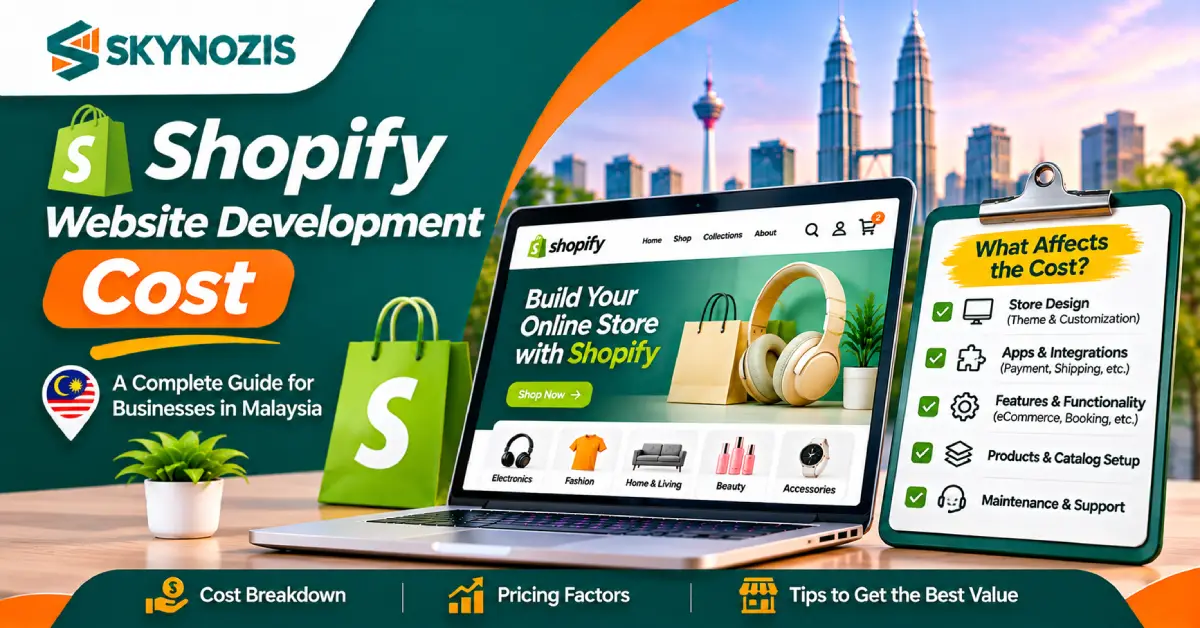
The answer depends on several factors, including website design, product catalogue size, custom functionality, payment gateway integration and ongoing platform expenses.
Understanding Shopify website development cost before starting your project can help you plan your budget, select the right features and avoid unexpected expenses.
In this guide, we explain the major cost factors for businesses in Malaysia and Singapore and what you should consider before hiring a Shopify development professional.
1. Shopify Subscription Plans and Monthly Fees
Before considering development expenses, you need to understand Shopify’s subscription costs.
Shopify offers different subscription plans designed for businesses at different stages. Each plan provides different features, staff account allowances and payment processing options.
Your subscription choice depends on your business requirements, sales operations and expected growth.
For example, a startup selling a limited product range may not require the same plan as an established retailer managing multiple staff members and international sales.
When reviewing Shopify monthly fees, consider:
- Subscription plan and billing frequency.
- Included eCommerce features.
- Staff account requirements.
- Payment processing rates.
- Third-party transaction fees.
- Additional services or upgrades.
Shopify’s subscription prices can differ depending on the country and billing arrangement. For example, Shopify’s Singapore pricing page currently lists the Basic plan from SGD 29 per month with annual billing, while monthly billing is listed separately.
Always check the official Shopify pricing page before finalising your budget.
2. Website Design and Customisation Requirements
Website design is another important factor affecting your development budget.
Shopify provides ready-made themes that allow businesses to launch online stores without designing every page from scratch.
However, businesses looking to establish a distinctive brand identity may require additional customisation.
Your design requirements could include:
- Custom homepage layouts.
- Unique product page designs.
- Custom navigation and mega menus.
- Brand-specific typography and colours.
- Custom collection pages.
- Promotional banners and landing pages.
- Mobile-first responsive layouts.
A basic theme configuration generally requires a different level of work compared with a fully customised storefront.
For businesses targeting Malaysia and Singapore, your website may also need localised content, currency presentation and different customer communication options.
Professional Shopify website design Malaysia should focus on more than appearance. It should provide a convenient shopping experience and guide visitors towards completing purchases.
3. Number of Products and Catalogue Management
The size and complexity of your product catalogue can influence development time and project requirements.
A store with a small number of products may require straightforward product configuration, whereas a larger catalogue can involve additional work.
Consider the following requirements:
- Product uploads and descriptions.
- Product categories and collections.
- Product variations such as sizes and colours.
- Product photographs and galleries.
- Inventory configuration.
- Product filters and search.
- Bulk product migration.
For example, a fashion retailer may need product variations for different sizes and colours, while an electronics business may require detailed specifications and warranty information.
If you are moving from an existing eCommerce platform, product migration can also affect the project scope.
The total Shopify store setup cost will therefore depend partly on how much product data needs to be organised, uploaded, reviewed and tested.
4. Payment Gateway Integration
Payment integration is an important consideration for businesses operating in Malaysia and Singapore.
Your online store should support payment methods that are suitable for your target customers.
Depending on your business location and payment provider, you may need:
- Online banking payments.
- Credit and debit cards.
- Digital wallets.
- Local payment methods.
- Payment confirmation notifications.
- Refund and transaction workflows.
There is an important regional difference to understand.
Shopify Payments currently lists Singapore among its supported countries, subject to eligibility and verification requirements. Malaysia is not currently listed on Shopify’s supported-country list, so Malaysia-based merchants generally need to select an eligible third-party payment provider.
Shopify may also charge third-party transaction fees, depending on the merchant’s plan and payment configuration. The external payment provider can charge its own processing fees separately.
Check the official Shopify payment gateway availability guide before selecting a provider.
Planning to Build Your Shopify Online Store?
Get the right website structure, professional design and eCommerce functionality for your business. Skynozis helps businesses plan and develop customised online shopping experiences based on their requirements.
5. Shopify Apps and Additional Functionality
Shopify apps allow businesses to extend their store functionality without developing every feature from scratch.
Depending on your requirements, you may need applications for:
- Product reviews and ratings.
- Email marketing automation.
- Customer loyalty programmes.
- Product recommendations.
- Advanced product filtering.
- Subscription management.
- Shipping and delivery integration.
- Inventory synchronisation.
Some applications are free, while others require monthly or usage-based payments.
These additional expenses should be considered when calculating Shopify app costs.
Avoid installing too many applications without a clear business requirement. Each application should provide meaningful value, and its compatibility, performance impact and ongoing subscription should be reviewed.
6. Custom Development and Third-Party Integrations
Some businesses need functionality that goes beyond standard Shopify themes and applications.
For example, an established retailer may require integration with an existing inventory system, accounting software, CRM or external business application.
Custom development requirements may include:
- Custom storefront functionality.
- Advanced product configurators.
- Custom API integrations.
- Inventory and order synchronisation.
- Multi-language functionality.
- Custom checkout-related workflows, subject to Shopify plan capabilities.
- Automated business processes.
The complexity of these requirements can significantly affect project timelines and development costs.
Custom Shopify development should be planned carefully. Before starting, identify which features are essential for launch and which can be introduced in later development phases.
Need Custom eCommerce Development for Your Business?
From customised online store designs to payment integrations and advanced business functionality, Skynozis helps businesses develop eCommerce solutions around their operational needs.
Let’s discuss your requirements and identify the right development approach for your online store.
7. Ongoing Maintenance, Support and Optimisation
Launching your Shopify website is not the end of the development process.
Your store may require ongoing improvements to maintain its performance, security and customer experience.
Consider budgeting for:
- Theme updates and improvements.
- Application subscription renewals.
- Product catalogue maintenance.
- Technical troubleshooting.
- Conversion rate optimisation.
- SEO improvements.
- New functionality.
- Website performance monitoring.
Shopify manages its hosted platform infrastructure, so you do not need to purchase separate conventional web hosting. However, your business may still have domain, app, subscription and professional support expenses.
What Determines the Total Shopify Website Development Cost?
There is no single development price that applies to every Shopify project.
A small online store using an existing theme has different requirements from a customised eCommerce website with advanced integrations and a large product catalogue.
Here is a practical breakdown of the expenses to consider:
| Cost component | What it covers |
|---|---|
| Shopify subscription | Monthly or annual platform plan |
| Domain | Custom website domain registration |
| Theme and design | Theme selection, licensing and customisation |
| Development | Store configuration and custom functionality |
| Product setup | Product uploads, variations and catalogue organisation |
| Payment integration | Payment provider configuration |
| Applications | Free and paid Shopify apps |
| Integrations | CRM, inventory, shipping and external systems |
| Maintenance | Ongoing technical support and improvements |
When comparing Shopify development cost Malaysia quotations, make sure you understand exactly what is included.
Ask whether the quotation covers design, product setup, payment integration, testing, revisions, training and post-launch support.
A transparent project scope makes it easier to compare developers and avoid unexpected expenses.
Why Choose Skynozis for Your eCommerce Website Development?
Choosing the right development partner is important when investing in an online store.
At Skynozis, we provide eCommerce website development solutions focused on professional design, user experience, business functionality and performance.
Our eCommerce development capabilities include:
- Custom eCommerce website design.
- Product and order management.
- Payment gateway integration.
- Inventory and shipping integrations.
- Mobile-friendly shopping experiences.
- eCommerce SEO optimisation.
- Custom business functionality.
Whether you are a startup, growing retailer or established business, we can help you evaluate your requirements and plan an appropriate eCommerce development solution.
Our team serves businesses across Malaysia and Singapore, with solutions designed around individual business objectives.
Frequently Asked Questions
The cost depends on design complexity, product quantity, theme customisation, payment gateway integration, applications and custom functionality. A proper estimate requires an understanding of your project scope.
A typical setup can include store configuration, theme installation, homepage design, product categories, product uploads, payment configuration, shipping settings and essential testing.
Yes. Shopify subscription charges are separate from professional development fees. You may also need to budget for domain registration, paid applications and payment processing.
Yes. Malaysian businesses can create Shopify stores. However, payment gateway selection requires additional consideration because Shopify Payments is not currently listed as available for Malaysia-based merchants.
Yes. Shopify can be suitable for small businesses looking for an eCommerce platform with product management, checkout functionality and online selling features.
Yes. You can customise themes, layouts and storefront functionality. More advanced changes may require specialist development, applications or API integrations.
Yes. Skynozis provides eCommerce website development, customised website design, payment integrations and business-focused functionality. Contact our team to discuss your project requirements.
Start Planning Your Shopify Website Project
Understanding development expenses before launching your online store helps you make better decisions about design, functionality and ongoing operations.
The right investment depends on your business objectives, product catalogue, customer experience requirements and future growth plans.
Rather than choosing a development package based only on price, compare the scope, technical capabilities, integrations and support included in each proposal.
If you are planning a new Shopify store or considering an upgrade to your existing eCommerce website, Skynozis can help you evaluate your requirements and identify a suitable development approach.
Ready to discuss your eCommerce project?
Visit https://skynozis.com/ or email info@skynozis.com to request a consultation.